

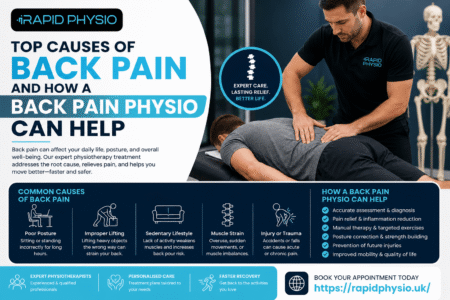
Back discomfort is one of the most common health concerns affecting people of all ages. Whether it develops suddenly after lifting something heavy or gradually from long hours of sitting, it can interfere with work, exercise, sleep, and everyday activities. Seeking timely care can prevent minor issues from becoming long-term conditions. If you are looking for back pain physio london, understanding the root causes and available treatment options is the first step toward lasting recovery. Rather than relying only on medication, many people benefit from targeted rehabilitation programs that restore strength, flexibility, and movement while reducing the risk of future flare-ups.
| Topic | Details |
| Common Causes | Poor posture, muscle strain, disc problems, arthritis, injuries, sedentary lifestyle |
| Symptoms | Stiffness, reduced mobility, muscle spasms, discomfort while sitting or standing |
| Treatment Approach | Assessment, manual therapy, exercise programs, posture correction, mobility training |
| Prevention | Regular exercise, ergonomic workspace, stretching, proper lifting techniques |
| Who Can Benefit | Office workers, athletes, seniors, manual laborers, people recovering from injuries |
Understanding the Main Causes and Effective Treatment Options
Many factors contribute to spinal discomfort, and identifying the exact cause is essential before beginning any rehabilitation program. A qualified therapist evaluates movement patterns, posture, muscle strength, and flexibility to create a personalized treatment plan.
1. Poor Posture
One of the leading contributors to spinal discomfort is poor posture. Sitting for prolonged periods while working at a desk, looking down at mobile devices, or standing incorrectly places additional stress on muscles and joints.
Common signs include:
- Rounded shoulders
- Forward head position
- Tight hip muscles
- Reduced flexibility
- Muscle fatigue after sitting
Corrective exercises and posture education help reduce unnecessary strain while improving overall alignment.
2. Muscle Strains and Ligament Injuries
Overstretching muscles during lifting, sports, or sudden movements can result in strains. Even simple household activities performed incorrectly may trigger discomfort.
Treatment often includes:
- Gentle stretching
- Soft tissue therapy
- Progressive strengthening exercises
- Mobility improvement
- Activity modification
Early rehabilitation encourages faster healing while minimizing stiffness.
3. Sedentary Lifestyle
Modern lifestyles often involve prolonged sitting with very little movement throughout the day. Weak core muscles and reduced flexibility increase stress on the spine.
Adding regular physical activity helps improve:
- Core stability
- Muscle endurance
- Joint mobility
- Blood circulation
- Overall spinal support
Therapists frequently recommend simple daily movement routines that fit easily into busy schedules.
4. Herniated or Bulging Discs
Discs act as cushions between the vertebrae. Age, repetitive movements, or heavy lifting may cause them to bulge or herniate, irritating nearby nerves.
Symptoms may include:
- Tingling sensations
- Numbness
- Muscle weakness
- Discomfort radiating into the legs
- Reduced flexibility
A carefully supervised rehabilitation program often reduces symptoms while improving function without surgery in many cases.
5. Arthritis and Age-Related Changes
As people age, natural wear and tear affects joints and connective tissues. Osteoarthritis may reduce flexibility while creating stiffness during movement.
Exercise therapy can help maintain:
- Joint mobility
- Muscle strength
- Balance
- Daily function
- Confidence during movement
Regular supervised exercise often provides better long-term outcomes than complete rest.
6. Sports Injuries
Athletes frequently experience spinal problems due to repetitive twisting, sudden impacts, or improper training techniques.
Sports rehabilitation focuses on:
Correct movement mechanics
Strength rebuilding
Flexibility
Injury prevention
Safe return to activity
Customized recovery plans reduce the chance of recurring injuries.
7. Workplace-Related Problems
Many office employees experience discomfort because of prolonged computer use, while manual workers may develop symptoms from repetitive lifting.
Professionals treating back pain london commonly recommend ergonomic adjustments such as:
- Adjustable chairs
- Proper desk height
- Monitor positioning
- Frequent movement breaks
- Correct lifting techniques
These small workplace improvements often produce significant long-term benefits.
How Professional Rehabilitation Helps
An experienced rehabilitation specialist begins with a comprehensive assessment rather than immediately treating symptoms.
The evaluation typically includes:
- Medical history review
- Movement analysis
- Strength testing
- Flexibility assessment
- Functional movement screening
Based on these findings, a personalized treatment plan is created.
Treatment methods may include:
- Manual therapy
- Guided stretching
- Strengthening exercises
- Core stabilization
- Balance training
- Posture education
- Home exercise programs
Each plan is adjusted according to individual goals and recovery progress.
Benefits of Early Treatment
Seeking help early often prevents minor issues from becoming chronic conditions.
Some of the biggest advantages include:
- Faster recovery
- Improved mobility
- Better flexibility
- Increased strength
- Reduced dependence on medication
- Lower risk of recurring episodes
- Improved quality of life
Early intervention also helps individuals return to work, sports, and daily routines more confidently.
When Should You Seek Professional Help?
While occasional stiffness may improve with rest, some symptoms require professional evaluation.
Consider scheduling an assessment if you experience:
- Symptoms lasting longer than two weeks
- Difficulty walking
- Reduced range of motion
- Persistent muscle tightness
- Recurring episodes
- Discomfort affecting sleep
- Difficulty performing daily activities
People searching online for back physio near me often benefit from selecting a clinic that performs detailed assessments and provides individualized rehabilitation plans rather than generic exercise programs.
Tips to Prevent Future Problems
Preventing future spinal issues requires consistent healthy habits.
- Helpful daily practices include:
- Maintain proper sitting posture.
- Stay physically active.
- Strengthen core muscles regularly.
- Stretch after prolonged sitting.
- Lift heavy objects correctly.
- Maintain a healthy body weight.
- Wear supportive footwear when appropriate.
- Take regular movement breaks throughout the day.
Even small lifestyle adjustments can significantly improve spinal health over time.
Choosing the Right Rehabilitation Specialist
Finding the right professional is an important part of recovery. Look for someone who provides individualized care rather than one-size-fits-all treatment.
A quality rehabilitation provider should offer:
- Thorough physical assessments
- Evidence-based treatment techniques
- Personalized exercise plans
- Clear recovery goals
- Education for long-term prevention
- Ongoing progress monitoring
Good communication between therapist and patient plays a vital role in achieving lasting results.
Conclusion
Spinal discomfort can develop for many reasons, including poor posture, muscle strain, sedentary habits, sports injuries, or age-related changes. Identifying the underlying cause allows for more effective treatment and better long-term outcomes. Personalized rehabilitation programs combine movement assessment, strengthening exercises, flexibility training, and education to restore function safely and reduce the likelihood of future problems. Working with a qualified back pain physio can help improve mobility, support recovery, and enable you to return to everyday activities with greater confidence and comfort.
Faqs
What are the most common causes of back pain?
The most common causes include poor posture, muscle strain, prolonged sitting, heavy lifting, sports injuries, arthritis, and disc-related conditions. Identifying the underlying cause is essential for choosing the right treatment.
How can a back pain physio help with recovery?
A back pain physio assesses your movement, posture, strength, and flexibility before creating a personalized rehabilitation plan. Treatment may include manual therapy, targeted exercises, posture correction, and mobility training to improve function and reduce recurring discomfort.
When should I see a physiotherapist for back pain?
You should consider seeing a physiotherapist if your symptoms last longer than two weeks, keep returning, limit your daily activities, affect your sleep, or make walking, bending, or standing difficult.
Can physiotherapy help avoid surgery?
In many cases, yes. Physiotherapy can effectively manage muscle strains, posture-related issues, and some disc conditions through structured rehabilitation, helping many people recover without surgical intervention. However, severe conditions may still require medical evaluation.
How long does it take to recover from back pain?
Recovery varies depending on the cause and severity. Mild muscle strains may improve within a few weeks, while chronic or complex conditions can take several months of consistent treatment and exercise.