

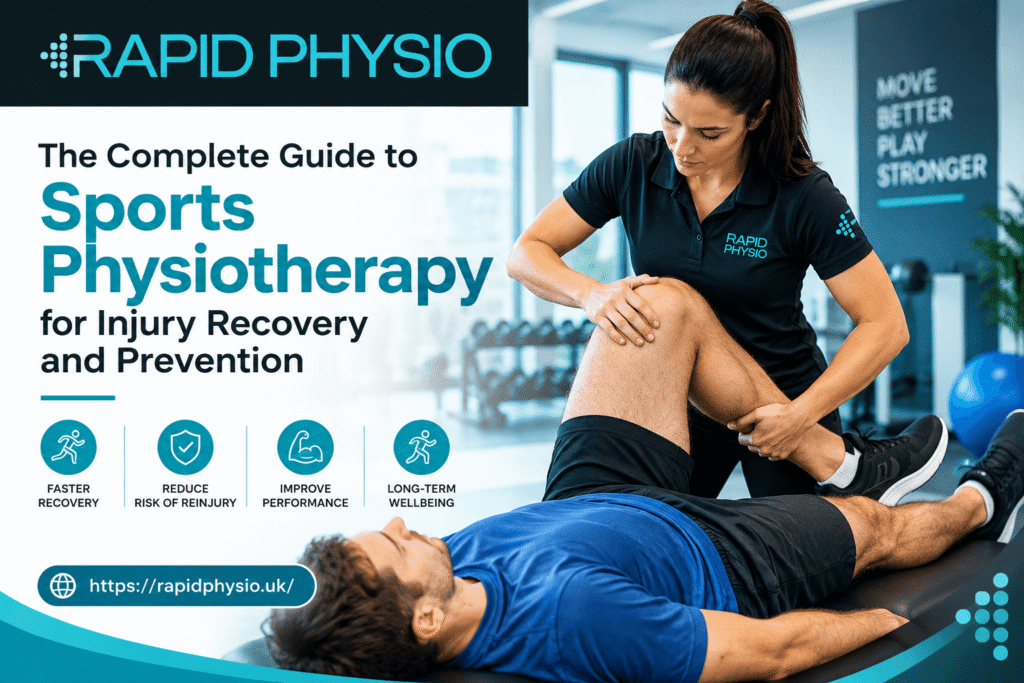
Sports injuries can affect anyone, from professional athletes to people who exercise recreationally. Choosing the right physiotherapy support can make a significant difference in understanding the cause of pain, restoring movement, rebuilding strength, and returning safely to normal activity.
A sports physiotherapist London can assess musculoskeletal problems and create an individual rehabilitation plan based on the injury, physical demands, and recovery goals. The right practitioner should focus on more than short-term pain relief. They should identify contributing factors, monitor progress, and help reduce the likelihood of recurring problems.
This guide explains what sports physiotherapy involves, when specialist treatment may be useful, how to evaluate a practitioner, and what you can expect during rehabilitation.
A sports physiotherapist helps assess, treat, and rehabilitate injuries affecting muscles, joints, tendons, and movement. They can support recovery from problems such as sprains, strains, tendon injuries, and sports-related pain while developing exercises and return-to-activity plans suited to the individual.
What Does a Sports Physiotherapist Do?
Sports physiotherapy focuses on movement-related conditions and injuries associated with physical activity. Treatment is not limited to athletes; active people of different ages and abilities can benefit from this specialist approach.
A typical assessment may consider:
- Where the pain occurs and when it started
- Previous injuries and relevant medical history
- Joint mobility and muscle strength
- Movement patterns and physical limitations
- Training, work, or sporting demands
- Factors that may contribute to reinjury
The physiotherapist then uses these findings to develop an appropriate management and rehabilitation strategy.
When Should You See a Sports Physiotherapist?
Not every minor ache requires professional treatment. However, persistent or worsening symptoms deserve attention, particularly when they interfere with exercise, work, sleep, or everyday movement.
Professional assessment may be appropriate when:
- Pain continues despite reducing activity.
- You experience repeated injuries in the same area.
- Swelling, stiffness, or weakness limits movement.
- You cannot perform normal sporting movements.
- Pain returns whenever you resume training.
- You are unsure whether it is safe to continue exercising.
Early assessment can also help identify movement or loading issues before they become more complicated.
Why Is Individual Assessment Important?
Two people can have similar symptoms but completely different underlying problems. For example, knee pain in a runner may relate to training load, muscle weakness, movement mechanics, footwear, previous injury, or several factors combined.
A good rehabilitation programme therefore starts with assessment rather than relying solely on a standard set of exercises.
Treatment may involve:
- Therapeutic exercise
- Strength and conditioning
- Mobility work
- Movement retraining
- Manual therapy when appropriate
- Education about activity and load management
- Gradual return-to-sport planning
The emphasis should remain on restoring function and helping the person understand how to manage their condition.
How Can Sports Massage Support Recovery?
Sports massage can be used alongside an appropriate rehabilitation programme. Sports massage London services may focus on soft-tissue techniques intended to address muscular tightness and support comfort after demanding physical activity.
However, massage should not automatically replace assessment or progressive rehabilitation. If pain is persistent, severe, or associated with weakness or restricted movement, determining the underlying cause should take priority.
How Do You Choose a Sports Physiotherapist London?
Finding a suitable practitioner involves more than searching for someone nearby. Consider their professional qualifications, experience, communication style, and approach to rehabilitation.
1. Check Professional Credentials
Look for appropriate professional registration and qualifications. In the UK, physiotherapists should be registered with the Health and Care Professions Council (HCPC) to practise as physiotherapists.
2. Consider Relevant Experience
Ask whether the practitioner regularly manages your type of injury or sporting activity. Someone experienced with running injuries may approach a distance runner’s rehabilitation differently from a person returning to recreational football.
3. Understand the Assessment Process
A thorough first appointment should involve discussion, physical assessment, explanation of findings, and a management plan. Be cautious of approaches that promise a quick solution without understanding the problem.
4. Look for Clear Communication
You should understand what may be causing your symptoms, what you can safely do, and how your rehabilitation will progress. Good communication makes it easier to follow the programme consistently.
What Can a Sports Injury Physiotherapist London Treat?
A sports injury physiotherapist London practitioner may manage a wide range of musculoskeletal conditions, depending on their clinical expertise.
Common examples include:
- Muscle strains
- Ligament sprains
- Tendinopathies
- Running-related injuries
- Shoulder and elbow problems
- Knee pain
- Ankle injuries
- Hip and groin conditions
- Back and neck pain
- Sports-related overuse injuries
Some injuries require medical investigation, imaging, or specialist referral. A responsible physiotherapist should recognise when treatment falls outside their scope and recommend appropriate medical assessment.
Physiotherapy Treatment: What Should You Expect?
Your first appointment commonly begins with questions about symptoms, lifestyle, activity levels, previous injuries, and goals. A physical examination may then assess movement, strength, flexibility, balance, and relevant functional activities.
A rehabilitation plan can include several stages:
- Symptom management: Reduce aggravating activities while maintaining suitable movement.
- Capacity building: Gradually improve strength, mobility, coordination, and tolerance.
- Functional training: Introduce movements that resemble work, exercise, or sporting demands.
- Return to activity: Increase intensity progressively while monitoring symptoms and performance.
The exact process varies according to the injury and individual response.
How Can You Reduce the Risk of Future Injuries?
Rehabilitation should not necessarily end when pain disappears. Returning to demanding activity before strength, movement control, and load tolerance have recovered can increase the risk of problems returning.
Useful principles include:
- Increase training volume gradually.
- Allow sufficient recovery between demanding sessions.
- Maintain strength and mobility throughout the year.
- Address recurring symptoms early.
- Avoid sudden increases in exercise intensity.
- Follow a structured return-to-sport programme after significant injuries.
Your programme should be adjusted according to your sport, fitness level, injury history, and goals.
Comparison: Choosing the Right Physiotherapy Approach
| Factor | Basic Approach | Specialist Sports Approach |
| Assessment | General | Activity and sport-specific |
| Rehabilitation | Standard exercises | Individualised progression |
| Return to activity | General guidance | Functional and gradual |
| Training demands | Limited consideration | Considered throughout |
| Injury prevention | Basic advice | Strength, loading and movement focus |
The most appropriate option depends on your condition rather than simply the label attached to a service.
Expert Insights and Due Diligence
Before selecting a practitioner, consider these practical checks:
- Verify professional registration and relevant qualifications.
- Ask about experience with your specific injury.
- Understand the proposed treatment approach.
- Discuss expected rehabilitation milestones.
- Ask how progress will be measured.
- Find out what exercises or activities you can perform independently.
- Confirm when referral to another healthcare professional may be necessary.
Avoid practitioners who guarantee a fixed recovery time. Biological recovery varies considerably between individuals and injuries.
Key Takeaways
- Sports physiotherapy combines assessment, rehabilitation, education, and progressive exercise.
- Persistent or recurring sports pain should be professionally assessed.
- Treatment should reflect the individual’s injury, activity demands, and recovery goals.
- Massage can complement rehabilitation but should not automatically replace clinical assessment.
- A safe return to sport should consider strength, movement quality, symptoms, and workload.
- Professional credentials and appropriate clinical experience are important when selecting a practitioner.
Conclusion
Choosing the right physiotherapy support involves looking beyond immediate pain relief. A qualified practitioner should assess the underlying problem, explain the findings clearly, develop progressive rehabilitation, and help you return to activity safely.
When comparing options for a sports physiotherapist London, consider professional credentials, relevant experience, individual assessment, communication, and long-term rehabilitation planning. These factors can help you make a more informed healthcare decision and find an approach suited to your specific needs.
Faqs
Can physiotherapy help prevent sports injuries?
Physiotherapy can contribute to injury-risk reduction by identifying strength deficits, mobility limitations, movement issues, and inappropriate training loads. A practitioner can develop exercises and conditioning strategies suited to your activities. Prevention is not guaranteed, but improving physical capacity and managing workload appropriately can support safer participation.
How long does sports injury rehabilitation take?
Recovery time varies according to the type and severity of injury, general health, activity demands, previous injuries, and adherence to rehabilitation. Some minor problems improve relatively quickly, while tendon, ligament, or significant muscle injuries may require longer progression. A qualified practitioner can provide a more appropriate estimate after assessment.
What is sports physiotherapy?
Sports physiotherapy is a specialised area of physiotherapy focused on musculoskeletal injuries, physical performance, rehabilitation, and safe return to activity. It can benefit professional athletes as well as recreationally active people. Treatment may include exercise, education, movement retraining, load management, and other clinically appropriate techniques based on the individual’s condition.
How do I find the Best sports physiotherapist in london?
Start by checking professional registration, relevant qualifications, clinical experience, treatment approach, and communication style. Consider whether the practitioner regularly treats your particular injury or sporting activity. Rather than choosing solely on advertising or price, look for a clinician who provides an appropriate assessment and explains a clear, progressive rehabilitation plan.