

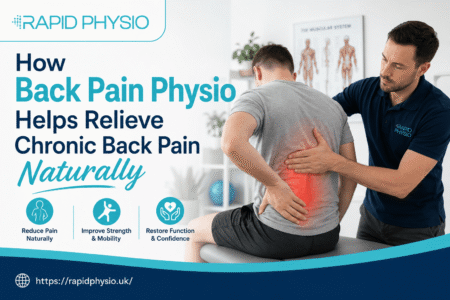
Chronic back pain can affect almost every part of daily life, from sitting at work and sleeping comfortably to walking, exercising, and completing household activities. While occasional discomfort may settle with time, persistent pain often requires a more structured approach. Back pain physio london can help people understand contributing factors, improve movement, build physical strength, and develop practical strategies for managing recurring symptoms. Physiotherapy focuses on improving function rather than simply masking discomfort.
This article explains how physiotherapy can support chronic back pain management, why exercise matters, what treatment may involve, when professional assessment is appropriate, and how people can make rehabilitation more sustainable.
How Does Physiotherapy Help Chronic Back Pain?
Physiotherapy can help chronic back pain by improving mobility, strength, physical capacity, and confidence with movement. A personalised programme may combine education, progressive exercises, activity modification, and selected hands-on techniques. The treatment approach depends on symptoms, medical history, lifestyle, physical ability, and individual goals.
What Is Chronic Back Pain?
Chronic back pain is generally described as pain that continues for more than three months. It may remain constant or appear through recurring episodes.
Importantly, persistent back pain does not always have one identifiable physical cause. Non-specific low back pain is common, and several factors can influence symptoms, including physical conditioning, previous injuries, work demands, sleep, stress, activity levels, and beliefs about movement.
This is why an individual assessment is often more useful than assuming that one muscle, posture, or spinal structure is responsible.
How Can Back Pain Physio Support Natural Pain Management?
Physiotherapy aims to help the body become more capable of handling everyday movement. Rather than depending entirely on passive treatment, rehabilitation generally encourages appropriate physical activity and gradual improvements in strength and mobility.
During an assessment, a physiotherapist may discuss the history of the pain, daily activities, occupational demands, previous injuries, exercise habits, and specific movements that are difficult. Physical assessment may then examine mobility, strength, balance, coordination, and functional movement.
A personalised programme may include:
- Education about pain, movement, and realistic recovery expectations.
- Progressive strengthening and mobility exercises.
- Guidance on returning to normal activities safely.
The exact programme depends on the individual’s presentation. An exercise that is useful for one person may not be appropriate for another, which is why copying generic online routines is not always advisable.
Why Is Exercise Important for Long-Term Back Pain?
Exercise is an important part of managing many cases of persistent low back pain. The purpose is not necessarily to eliminate every sensation immediately but to gradually improve physical capacity and confidence.
For example, someone who has avoided bending because of recurring discomfort may initially perform gentle mobility exercises. As tolerance improves, rehabilitation might progress toward resistance training, lifting practice, walking, or other movements relevant to work and everyday life.
The NHS recommends staying active with back pain where possible and advises against prolonged bed rest. Suitable activities can vary depending on the individual. Professional guidance can help determine an appropriate starting point.
What Does a Typical Physiotherapy Programme Involve?
Initial Assessment
A detailed assessment helps identify how symptoms affect movement and daily activities. The physiotherapist may ask when symptoms started, what aggravates them, what makes them easier, and whether previous treatment has helped.
Individual Treatment Plan
Once the assessment is complete, the therapist can establish practical goals. These might include returning to work, walking further, improving lifting ability, exercising comfortably, or becoming more confident with everyday movement.
Progressive Rehabilitation
Exercise difficulty can gradually increase as the person’s tolerance improves. Progression may involve additional resistance, repetitions, movement range, duration, or functional complexity.
Self-Management
A major goal of rehabilitation is to give the person skills that can be continued independently. This can include home exercises, activity planning, pacing, and strategies for handling temporary flare-ups.
How Does Manual Therapy Fit Into Back Pain Rehabilitation?
Manual therapy can include techniques such as mobilisation or massage. These approaches may help some people manage symptoms or temporarily improve movement.
However, hands-on treatment is generally more useful when combined with active rehabilitation rather than being treated as the entire solution. NICE guidance recommends manual therapy for low back pain only as part of a treatment package that includes exercise.
This distinction is important because chronic pain management usually requires sustainable changes in physical capacity and daily behaviour.
How Can You Choose a Back Pain Physio Near Me?
Searching for a back pain physio near me can make accessing treatment convenient, but proximity should not be the only consideration.
When comparing providers, consider their professional registration, relevant musculoskeletal experience, assessment process, communication style, and approach to exercise-based rehabilitation.
In the UK, physiotherapists are regulated by the Health and Care Professions Council (HCPC). NHS physiotherapy services are also available for eligible patients in many areas, with referral arrangements varying between services.
A good consultation should leave you with a clear understanding of the likely contributing factors, recommended treatment approach, expected progression, and circumstances in which further medical assessment may be required.
What Factors Can Influence Chronic Back Pain?
Persistent symptoms can be influenced by more than muscles and joints. A person’s working environment, activity level, sleep, stress, previous experiences with pain, and general health may all affect how symptoms are experienced.
For example, an office worker who spends several hours sitting may benefit from gradually increasing movement throughout the day. Someone performing physically demanding work may instead require progressive strengthening and task-specific lifting practice.
This broader perspective helps explain why two people with similar pain descriptions can require very different rehabilitation strategies.
When Should You Seek Professional Assessment?
Many uncomplicated episodes of back pain improve within several weeks. However, persistent symptoms that interfere with normal activities may warrant professional assessment.
Medical advice is particularly important when back pain is accompanied by symptoms such as unexplained weight loss, fever, feeling generally unwell, or rapidly worsening severe pain.
Certain symptoms require urgent assessment. New problems controlling the bladder or bowel, numbness around the genital or anal region, or significant weakness or numbness affecting both legs can indicate a serious condition.
Physiotherapy should never be used as a substitute for urgent medical evaluation when red-flag symptoms are present.
Active vs Passive Back Pain Treatment
| Approach | Examples | Main Role |
| Active rehabilitation | Strengthening, mobility and functional exercises | Builds physical capacity |
| Manual therapy | Mobilisation and massage | May help symptoms or movement |
| Education | Pain and activity guidance | Supports informed self-management |
| Functional training | Walking, lifting and work-related movements | Transfers rehabilitation into daily life |
| Combined approach | Exercise with selected hands-on treatment | Addresses different rehabilitation needs |
The most appropriate combination depends on the person’s symptoms, preferences, physical capacity, and treatment goals.
What Are the Best Practices for Managing Chronic Back Pain?
Long-term management is usually more sustainable when rehabilitation becomes part of normal daily life rather than a short-term intervention.
One useful principle is gradual progression. Instead of suddenly increasing exercise intensity after a period of inactivity, people can build capacity step by step.
Another important principle is consistency. A manageable exercise routine performed regularly may be more useful than an intensive programme that is difficult to maintain.
Three practical habits can support rehabilitation:
- Maintain appropriate everyday movement instead of unnecessarily avoiding activity.
- Follow the exercise progression recommended by your physiotherapist.
- Monitor changes in symptoms and communicate significant changes during follow-up appointments.
Sleep and stress management should also be considered because persistent pain can affect sleep, while poor sleep and stress may make pain harder to manage.
Common Mistakes to Avoid
Expecting one treatment session to permanently resolve chronic pain is a common misconception. Rehabilitation usually requires time, participation, and gradual progression.
Another mistake is completely avoiding movement because of fear that exercise will cause damage. While some activities may need temporary modification, unnecessary inactivity can reduce physical capacity.
It is also important not to increase exercise too quickly. A programme should be challenging enough to promote adaptation while remaining appropriate for the individual’s current ability.
Finally, treatment should be reviewed when progress is limited. Persistent symptoms may require reassessment rather than simply repeating the same approach.
Expert Due Diligence Checklist
Before beginning physiotherapy, it can be helpful to understand what the treatment involves. Ask the practitioner how they have assessed your symptoms, what the main rehabilitation goals are, how progress will be measured, and what you should do if symptoms change.
Documentation can also make rehabilitation easier to follow. Keeping a simple record of exercises, activity levels, symptom patterns, and functional improvements may help both the patient and physiotherapist identify useful trends.
For long-term management, the most valuable outcome is not necessarily completing a fixed number of treatment sessions. It is developing the knowledge, strength, confidence, and movement capacity needed to manage everyday activities more independently.
Key Takeaways
Chronic back pain is complex and does not always have one identifiable cause. Physiotherapy can provide a structured approach that combines education, exercise, movement training, and appropriate symptom-management strategies.
The focus should be on realistic functional improvement rather than unrealistic promises of instant or permanent pain elimination. Individual assessment is particularly important because symptoms, physical capacity, lifestyle, and recovery needs differ from person to person.
Conclusion
Managing chronic back pain naturally is usually about building the body’s ability to move and function rather than searching for a single quick solution. A personalised physiotherapy programme can combine education, progressive exercise, activity guidance, and appropriate hands-on techniques to support long-term self-management.
For people considering back pain physio london, choosing a qualified professional who uses an individualised, active rehabilitation approach can be an important step. Those searching specifically for lower back pain physio london should also consider professional credentials, assessment quality, communication, and realistic treatment goals.
For additional information about physiotherapy and rehabilitation approaches, readers can explore Rapid Physio as an informative resource and discuss persistent symptoms with a qualified healthcare professional.
Faqs
Can physiotherapy help with chronic back pain?
Yes, physiotherapy can support many people with persistent back pain by improving strength, mobility, physical capacity, and confidence with movement. Treatment is normally personalised according to symptoms and functional goals. It may include exercise, education, activity modification, and selected manual techniques. Results vary between individuals, and physiotherapy cannot guarantee complete elimination of pain.
How long does physiotherapy take to improve chronic back pain?
There is no universal treatment timeline. Someone with mild functional limitations may progress relatively quickly, while longstanding symptoms or reduced physical conditioning may require a longer rehabilitation period. Progress should be measured through meaningful changes such as improved walking, lifting, movement, work participation, or exercise tolerance rather than relying only on pain intensity.
Is exercise safe for people with chronic back pain?
Exercise is commonly recommended for chronic low back pain, but the appropriate type and intensity depend on the individual’s circumstances. A physiotherapist can help select suitable movements and progression levels. Exercise should not be used to ignore warning signs. New bladder or bowel problems, saddle-area numbness, or significant neurological weakness require urgent medical assessment.
Is manual therapy necessary for chronic back pain?
Manual therapy is not necessarily required for everyone. Techniques such as mobilisation or massage may provide short-term symptom relief or help movement for some people. However, guidance generally supports using manual therapy alongside exercise rather than relying on hands-on treatment alone. The decision should be based on assessment, individual needs, preferences, and rehabilitation goals.