

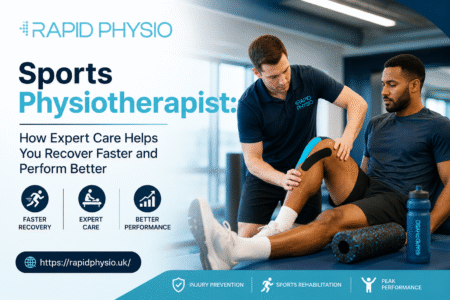
Sports injuries can affect much more than your ability to train. A sprained ankle, muscle strain, tendon problem, knee injury or persistent shoulder pain can interfere with work, sleep, everyday movement and confidence. The right rehabilitation approach focuses not only on reducing symptoms but also on restoring strength, mobility, coordination and sport-specific function.
A sports physiotherapist London service can help athletes and active individuals understand the cause of an injury, develop an appropriate rehabilitation plan and gradually return to training. Physiotherapy commonly uses exercise, education, manual techniques and other interventions to improve movement and manage musculoskeletal problems.
Whether you are a professional athlete, recreational runner, gym enthusiast or someone who simply wants to stay active, understanding how sports rehabilitation works can help you make better decisions about your recovery.
A sports physiotherapist helps people recover from sports-related injuries by assessing movement, identifying contributing factors and creating an individual rehabilitation programme. Treatment may include therapeutic exercise, mobility work, strength training, education and activity modification. The goal is to restore function safely while preparing the person for a gradual return to their usual sport or activity.
What Does a Sports Physiotherapist Do?
A sports physiotherapist specialises in assessing and managing problems involving muscles, joints, tendons, ligaments and movement patterns.
Unlike simply treating the painful area, a good assessment considers how the injury affects your overall movement and performance.
A physiotherapist may evaluate:
- Joint mobility and range of movement
- Muscle strength and endurance
- Balance and coordination
- Running, jumping or lifting mechanics
- Training load and recent activity changes
- Previous injuries
- Sport-specific movements
- Factors that may contribute to recurring symptoms
The Chartered Society of Physiotherapy describes rehabilitation as a process focused on helping people recover, adapt and return to active lives, with assessment, goal setting, treatment and regular progress evaluation forming important parts of care.
Why Is Sports Physiotherapy Important for Recovery?
Stopping activity completely is not always the best long-term strategy. Depending on the injury, controlled movement and appropriately progressed exercise can help restore physical capacity.
NICE guidance on rehabilitation after traumatic injury emphasises personalised rehabilitation plans, goal setting and appropriately tailored exercise. It also recommends programmes that can include strengthening, aerobic conditioning, balance and task-specific training when clinically appropriate.
A structured approach can help you:
- Understand what may be causing your symptoms.
- Establish realistic recovery goals.
- Restore mobility and strength.
- Gradually increase physical workload.
- Rebuild confidence in the injured area.
- Prepare for sport-specific demands.
The important point is that rehabilitation should be individualised rather than based on a generic exercise programme.
When Should You See a Sports Physiotherapist?
You do not necessarily need to wait until an injury becomes severe.
Consider professional assessment when you experience:
- Persistent pain during or after exercise
- Repeated muscle strains
- Swelling or reduced joint movement
- Weakness following an injury
- Pain that changes your technique
- Difficulty returning to previous training levels
- Recurrent injuries in the same area
- Reduced confidence when returning to sport
Early assessment can also be useful when symptoms are affecting your normal activities. NHS guidance notes that physiotherapy can help with musculoskeletal conditions including sprains, strains and sports injuries.
How Does Sports Physiotherapy Support Better Performance?
Sports rehabilitation is not only about getting rid of pain. Once an injury has settled sufficiently, rehabilitation can focus on rebuilding the physical qualities required for your activity.
For example, a footballer recovering from an ankle injury may eventually need to work on:
- Single-leg strength
- Balance
- Change-of-direction control
- Acceleration and deceleration
- Jumping and landing
- Sport-specific drills
A recreational runner may instead need progressive calf strength, lower-limb conditioning, running-load management and gradual exposure to longer distances.
The rehabilitation goal should therefore reflect what you actually need to do—not simply whether you can walk without discomfort.
What Role Can Sports Massage Play?
Sports massage can sometimes be used alongside a broader rehabilitation programme. Sports massage London services may focus on soft-tissue techniques intended to support comfort, mobility or recovery, depending on the individual’s circumstances.
However, massage should not automatically replace assessment and active rehabilitation. For many musculoskeletal problems, exercise and progressive loading are important components of restoring physical capacity.
- A practical approach is to ask:
- What is the purpose of the treatment?
- How does it fit into my rehabilitation plan?
- What exercises or activity changes should accompany it?
- How will progress be measured?
How Is a Typical Rehabilitation Programme Structured?
A rehabilitation plan will vary according to the injury, sport, symptoms and individual goals, but it commonly develops through several stages.
1.Assessment
The clinician gathers information about symptoms, injury history, training and functional limitations.
2. Goal Setting
Goals should be specific and meaningful. For an athlete, the objective might be returning to competitive training. For another person, it could simply be walking, cycling or exercising comfortably.
3. Initial Rehabilitation
Early treatment may focus on controlling symptoms while maintaining appropriate movement and physical capacity.
4.Strength and Conditioning
Exercises are progressively adjusted to improve strength, endurance, balance, coordination and tolerance to load.
5. Sport-Specific Preparation
The programme becomes increasingly similar to the demands of the individual’s activity.
6. Return to Sport
Returning to full training should be progressive rather than based solely on whether pain has disappeared.
NICE recommends tailoring exercise frequency and intensity to the person’s needs and goals, using clinical judgement to determine appropriate progression.
What Should You Look for in a Physiotherapist Treating Sports Injury London?
Choosing a clinician should involve more than searching for the nearest available appointment.
When comparing providers, consider:
- Appropriate professional registration
- Experience with your particular injury or sport
- A clear assessment process
- Individualised rehabilitation planning
- Progress monitoring
- Communication about expectations
- Willingness to refer or collaborate with other healthcare professionals when necessary
In the UK, physiotherapist is a protected professional title, and physiotherapists are regulated by the Health and Care Professions Council (HCPC).
The Chartered Society of Physiotherapy also provides a public directory for finding physiotherapists and identifies sports physiotherapy among its specialist areas.
Sports Physiotherapist vs General Physiotherapy
| Factor | General Physiotherapy | Sports-Focused Physiotherapy |
| Musculoskeletal assessment | Yes | Yes |
| Injury rehabilitation | Yes | |
| Exercise prescription | Yes | Yes |
| Sport-specific testing | May vary | Often central to care |
| Return-to-sport planning | May vary | Common focus |
| Performance considerations | Limited or situation-dependent | More prominent |
| Training-load discussion | May vary | Often important |
The distinction is not about one being universally better. The most suitable professional depends on your injury, activity level, goals and clinical needs.
What Are the Best Practices for a Safe Return to Sport?
A common mistake is treating the end of pain as the end of rehabilitation.
A safer approach is to consider several factors:
- Can you perform everyday activities comfortably?
- Has relevant strength improved?
- Can you tolerate sport-specific movements?
- Can you increase training volume without a significant symptom flare?
- Have movement and coordination improved?
- Are you psychologically confident about returning?
- Can you complete progressive training before returning to competition?
For complex injuries, rehabilitation may involve several professionals rather than physiotherapy alone. NICE highlights coordinated rehabilitation and multidisciplinary care where appropriate.
Common Mistakes That Can Delay Recovery
Even a well-designed programme can be undermined by poor habits.
Returning too quickly
Feeling better does not necessarily mean the body is ready for maximum sporting demands.
Doing too little
Avoiding all movement for too long can reduce strength and conditioning.
Following generic exercises
An exercise that is appropriate for one injury may not be appropriate for another.
Ignoring training load
Sudden increases in mileage, intensity, frequency or resistance can contribute to problems.
Focusing only on symptoms
Pain is important information, but rehabilitation should also consider strength, movement quality, capacity and function.
Expert Due-Diligence Checklist
Before starting treatment, ask yourself:
- Is the practitioner appropriately qualified and registered?
- Do they understand my sport or activity?
- Have they completed a proper assessment?
- Are my rehabilitation goals clearly defined?
- Is there a progression plan?
- Will my progress be reviewed?
- Do I understand what I should and should not do between sessions?
- Is there a plan for returning to training or competition?
- Will I be referred onward if my symptoms require another type of assessment?
This approach helps you evaluate rehabilitation based on clinical quality rather than simply the number of treatments offered.
Key Takeaways
Sports physiotherapy combines assessment, rehabilitation, education and progressive exercise.
The objective is not simply to reduce pain but to restore useful physical capacity.
Rehabilitation should be tailored to the individual’s injury, goals and activity.
Strength, balance, mobility, conditioning and sport-specific skills can all matter during recovery.
Massage may complement rehabilitation but should not automatically replace active treatment.
A gradual return to sport is generally more appropriate than an abrupt return to full training.
In the UK, checking professional registration is an important part of choosing a physiotherapist.
Persistent, worsening or unusual symptoms may require assessment by an appropriate healthcare professional rather than self-treatment.
Conclusion
Recovering from a sports injury is rarely just about waiting for symptoms to disappear. Effective rehabilitation combines assessment, education, progressive exercise and appropriate return-to-activity planning. The best approach depends on the individual, the injury and the demands of the sport.
If you are considering a sports physiotherapist London service, look for evidence of appropriate professional registration, relevant experience and an individualised rehabilitation approach. For people searching for a sports injury physiotherapist London, understanding the rehabilitation process can make it easier to ask useful questions and choose appropriate care.
For additional information about physiotherapy, rehabilitation and sports-related recovery, readers can also explore trusted professional and healthcare resources such as the NHS, NICE and the Chartered Society of Physiotherapy.