

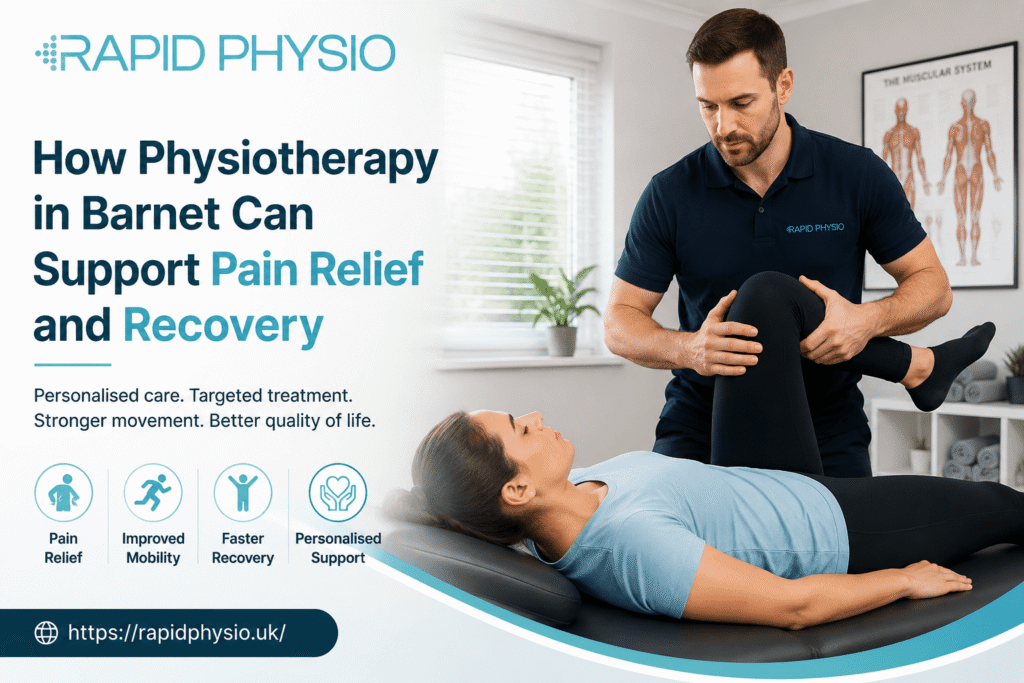
Persistent pain can affect movement, sleep, work, exercise, and everyday independence. Whether discomfort follows an injury, develops gradually, or is linked to a long-term musculoskeletal problem, appropriate physical rehabilitation can help restore function and confidence. Understanding how physiotherapy barnet services approach assessment, movement, and recovery can help people make informed decisions about managing discomfort and improving mobility.
How Barnet Physiotherapy Supports Pain Relief and Recovery
A structured rehabilitation programme begins with understanding the cause and nature of the problem. A qualified practitioner may assess posture, joint movement, muscle strength, balance, flexibility, and functional limitations. This assessment helps identify contributing factors rather than simply focusing on the painful area.
The treatment plan can then be adapted to the person’s symptoms, lifestyle, goals, and stage of recovery. Depending on the condition, approaches may include therapeutic exercises, mobility work, manual techniques, education, activity modification, and advice about gradually returning to normal activities.
Common concerns that may benefit from professional assessment include:
- Back and neck discomfort
- Sports-related injuries
- Joint stiffness and reduced mobility
- Muscle strains and soft-tissue problems
- Shoulder, knee, or ankle conditions
- Recovery following surgery or injury
- Repetitive strain and work-related discomfort
- Balance and movement difficulties
- Individualised Exercise and Movement
Exercise is often an important part of recovery because appropriate movement can gradually improve strength, flexibility, coordination, and tolerance to activity. Rather than relying only on passive treatment, a practitioner may teach exercises that can be continued independently.
The intensity should match the person’s current ability. Starting with manageable movements and progressing gradually can help build capacity without placing unnecessary stress on vulnerable tissues. Consistency is usually more useful than attempting demanding exercises too quickly.
Managing Pain Through Education
Pain is not always a direct indication of tissue damage. Factors such as stress, sleep, previous injury, activity levels, and sensitivity of the nervous system can influence how symptoms are experienced. Clear education can help individuals understand these influences and make sensible decisions about movement.
A practitioner may also discuss pacing. This involves balancing activity and rest rather than repeatedly exceeding physical limits and then becoming inactive because symptoms increase. Such strategies can be particularly useful for people experiencing recurring discomfort.
Support for Recovery at Home
Not everyone can easily travel for appointments. home physiotherapy barnet services may provide an alternative for people who have mobility limitations, are recovering after an operation, or find travelling difficult.
Treatment delivered in a familiar environment can also allow the practitioner to observe everyday movement patterns and consider practical factors such as stairs, seating, walking routes, and other activities. The specific suitability of this approach depends on the person’s condition and clinical requirements.
What to Expect During a Rehabilitation Programme
Recovery is rarely identical for everyone. Some problems may improve within a relatively short period, while persistent or complex conditions can require longer-term management. Progress is generally evaluated through changes in movement, strength, function, pain levels, and confidence.
| Recovery factor | Why it matters |
| Initial assessment | Identifies movement limitations and possible contributing factors |
| Exercise programme | Builds strength, flexibility, and functional capacity |
| Education | Helps people understand symptoms and manage daily activity |
| Progress monitoring | Shows whether the programme needs adjustment |
| Gradual progression | Supports safer return to normal activities |
People should communicate openly if an exercise increases symptoms significantly or if progress appears to have stopped. Adjustments may be needed rather than simply increasing intensity.
When Professional Assessment May Be Appropriate
Persistent pain should not always be managed independently. Seeking an assessment can be sensible when symptoms interfere with ordinary activities, continue despite reasonable self-care, repeatedly return, or follow an injury.
Urgent medical attention may be required when pain is accompanied by serious symptoms such as sudden weakness, loss of bladder or bowel control, major trauma, unexplained weight loss, severe chest discomfort, or other concerning changes. A rehabilitation professional can also advise when referral to another healthcare provider is appropriate.
Conclusion
Effective rehabilitation is based on careful assessment, realistic goals, progressive activity, and ongoing self-management. Rather than concentrating solely on reducing discomfort, a well-planned approach aims to improve movement and help people return to meaningful daily activities. For those considering professional support, choosing an appropriately qualified practitioner and discussing individual needs during an assessment can be a useful first step. A Barnet Physiotherapy Clinic may provide assessment and rehabilitation options suited to different mobility and recovery requirements, while keeping treatment focused on practical, measurable progress.