

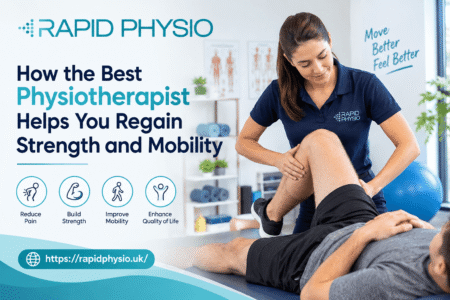
Regaining strength and mobility after an injury, surgery, chronic pain, or reduced physical activity often requires more than rest. A qualified physiotherapist assesses movement, identifies contributing factors, and develops a structured rehabilitation programme suited to the individual. Choosing the best physiotherapist London patients can rely on means looking beyond qualifications and considering assessment methods, communication, treatment planning, and progress monitoring. Whether you are recovering from a sports injury, managing back pain, or rebuilding movement after surgery, professional guidance can make rehabilitation more structured and purposeful.
The best physiotherapist helps restore strength and mobility by first assessing movement, pain, flexibility, balance, and functional limitations. They then create an individualised rehabilitation plan using therapeutic exercise, mobility work, education, and appropriate hands-on techniques. Progress is monitored regularly so exercises and treatment can be adjusted as recovery develops.
What Does a Physiotherapist Do During Rehabilitation?
Physiotherapy focuses on improving physical function while addressing factors that may contribute to pain or restricted movement. Treatment is not simply about relieving symptoms; it can also involve rebuilding strength, improving coordination, restoring joint movement, and helping patients return safely to everyday activities.
An initial assessment may consider posture, walking patterns, joint mobility, muscle strength, balance, flexibility, and the way symptoms affect daily tasks. The findings help the practitioner establish realistic rehabilitation goals.
For example, someone recovering from a knee injury may initially struggle with stairs or standing from a chair. A rehabilitation programme could gradually progress from controlled movement and strengthening to functional exercises that replicate those activities.
Why Is Individualised Treatment Important?
People with the same diagnosis can have very different symptoms and physical capabilities. A standard exercise programme may therefore be unsuitable or insufficient for a particular person.
An individualised approach considers factors such as:
- Current strength and mobility
- Pain levels and symptom behaviour
- Previous injuries and medical history
- Work, sport, and lifestyle requirements
- Recovery stage and functional goals
A person who works at a desk may need a different rehabilitation strategy from someone who regularly participates in running or competitive sport. Treatment should reflect those practical differences.
How Does a Physio Clinic London Support Recovery?
A professional physio clinic London patients choose should provide an appropriate environment for assessment, treatment, exercise instruction, and rehabilitation monitoring. The quality of care depends not only on equipment but also on clinical reasoning and communication.
A useful rehabilitation process generally follows several stages:
- Assessment: The practitioner identifies movement restrictions, weakness, pain patterns, and functional difficulties.
- Goal setting: Short-term and longer-term objectives are established based on the patient’s needs.
- Treatment planning: Appropriate exercises, education, manual techniques, and activity modifications are selected.
- Progression: Exercises become more challenging as strength, control, and confidence improve.
- Reassessment: Outcomes are reviewed to determine whether the programme needs adjustment.
This structured process helps prevent rehabilitation from becoming a collection of unrelated exercises.
What Exercises Help Restore Strength and Mobility?
Exercise selection depends on the individual’s condition and rehabilitation stage. Common approaches include strengthening exercises, range-of-motion activities, balance training, functional movements, and aerobic conditioning where appropriate.
For instance, after a period of reduced activity, a patient may begin with controlled bodyweight movements before progressing to resistance-based exercises. Someone returning to sport may eventually require jumping, landing, agility, or sport-specific drills.
Exercises should be performed with appropriate technique and progression. Increasing intensity too quickly can aggravate symptoms, while insufficient challenge may limit improvement.
How Do You Choose the Best Physiotherapist London Patients Can Trust?
Choosing a practitioner should involve more than searching for the highest-rated service. Patients should consider professional qualifications, relevant clinical experience, communication style, and whether the practitioner explains the reasoning behind treatment recommendations.
Important considerations include:
- Appropriate professional registration and qualifications
- Experience with the type of problem being treated
- Clear assessment and treatment explanations
- A willingness to establish measurable goals
- Regular review of progress
- Advice that supports safe activity outside appointments
For UK patients, checking professional registration and understanding who is responsible for their care can provide additional confidence. Patients should also communicate any relevant medical conditions, medications, previous procedures, or changes in symptoms.
What Is the Difference Between Pain Relief and Functional Recovery?
Pain reduction and functional improvement are related but not always identical. A person may experience less discomfort while still having weakness, reduced endurance, poor balance, or limited movement.
Effective rehabilitation therefore looks at meaningful activities as well as symptoms. Depending on the individual, useful measures might include walking distance, stair tolerance, lifting ability, range of motion, balance, or the ability to return to work or sport.
This broader perspective helps ensure that treatment is focused on improving everyday function rather than relying solely on whether pain has temporarily decreased.
What Should You Expect From Physiotherapy Clinics in London?
Different physiotherapy clinics in London may offer services for musculoskeletal conditions, sports injuries, neurological rehabilitation, post-operative recovery, and other functional problems. The appropriate service depends on the patient’s needs.
Before starting treatment, patients can ask:
- What will the initial assessment involve?
- What are the proposed rehabilitation goals?
- How will progress be measured?
- How frequently should treatment be reviewed?
- What should be done between appointments?
- When should symptoms be reported or reassessed?
Clear answers can help patients understand what their rehabilitation involves and what role they need to play.
Best Practices for Successful Rehabilitation
Physiotherapy works most effectively when treatment recommendations are incorporated into daily life. Consistency is usually more useful than performing exercises intensely for a short period and then stopping.
Patients should follow their prescribed programme, maintain communication about changing symptoms, and avoid making significant increases in activity without appropriate guidance.
It is also important to recognise warning signs. Severe or rapidly worsening symptoms, unexplained neurological changes, significant swelling, chest pain, difficulty breathing, or other concerning symptoms may require urgent medical assessment rather than routine rehabilitation.
Expert Insights: Common Rehabilitation Mistakes
Several habits can interfere with recovery:
- Doing too much too soon: Rapidly increasing exercise volume or resistance can overload recovering tissues.
- Stopping when symptoms improve: Reduced pain does not necessarily mean strength and function have fully returned.
- Ignoring technique: Poor movement patterns can reduce exercise effectiveness and increase unnecessary strain.
- Following generic online exercises: An exercise suitable for one condition may not be appropriate for another.
- Failing to communicate: Physiotherapists need accurate information about symptoms and activity levels to modify treatment appropriately.
A rehabilitation programme should evolve as the patient’s capabilities change.
Key Takeaways
Successful rehabilitation is a gradual process built around assessment, appropriate exercise, education, and regular progress reviews. The right physiotherapist does not simply provide exercises; they explain why those exercises are being used and how they contribute to functional goals.
Patients should look for qualified professionals who communicate clearly, use evidence-informed approaches, monitor progress, and adapt treatment when circumstances change.
Conclusion
Regaining strength and mobility requires a structured approach rather than relying solely on rest or short-term symptom relief. A skilled physiotherapist assesses the underlying functional limitations, establishes practical goals, and progressively adapts rehabilitation as the person improves.
When searching for the best physiotherapist London patients should consider qualifications, relevant experience, communication, assessment quality, and progress monitoring. Whether someone is recovering from injury, surgery, chronic pain, or reduced activity, appropriate physiotherapy in London can provide a structured pathway towards better movement and functional independence.
Faqs
How does a physiotherapist help improve strength and mobility?
A physiotherapist assesses your movement, flexibility, muscle strength, balance, and functional limitations before creating a personalised rehabilitation plan. Treatment may include therapeutic exercises, mobility training, manual techniques, and movement education. The programme is gradually adjusted as your strength and physical function improve.
When should I see a physiotherapist?
You may benefit from physiotherapy if you have persistent pain, reduced mobility, muscle weakness, difficulty performing everyday activities, or are recovering from an injury or surgery. A physiotherapist can assess the problem and recommend appropriate treatment, exercises, and activity modifications based on your individual needs.