

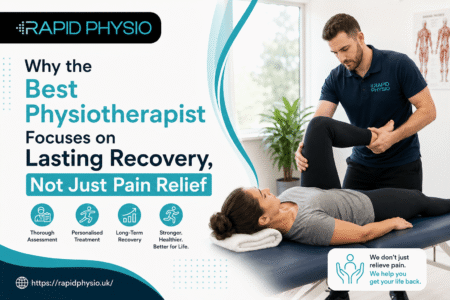
Pain can be the reason someone seeks professional care, but it should rarely be the only measure of progress. Temporary relief may make daily activities easier, yet it does not always address the movement patterns, strength deficits, or underlying factors that contribute to discomfort. A thoughtful approach focuses on restoring function and reducing the likelihood of recurring problems. When searching for the best physiotherapist london, patients should therefore look beyond immediate comfort and consider whether the treatment plan supports long-term recovery.
Understanding the Difference Between Pain Relief and Lasting Recovery
Pain is often a warning signal rather than the complete problem. It may develop because of an injury, repetitive movement, poor posture, muscle weakness, joint restrictions, or changes in how the body handles physical load. Simply reducing symptoms without understanding these contributing factors can leave the original issue unresolved.
A long-term approach begins with an appropriate assessment. The practitioner considers movement, flexibility, strength, balance, lifestyle, previous injuries, and the activities that may be contributing to symptoms. This information helps create a plan that addresses both current discomfort and the factors that could cause it to return.
For people researching physiotherapy in london, this distinction is particularly important. A suitable care plan should be based on individual needs rather than relying on the same exercises or techniques for every person.
What a Long-Term Recovery Approach Includes
A sustainable recovery plan commonly combines several elements:
Detailed assessment: Understanding symptoms, movement limitations, strength, mobility, and relevant lifestyle factors.
Individualised exercise: Selecting exercises that match the person’s condition, ability, and recovery stage.
Movement education: Helping patients understand how posture, technique, workload, and everyday habits can influence symptoms.
Progressive strengthening: Gradually improving capacity so the body can handle normal and demanding activities more confidently.
Functional rehabilitation: Connecting exercises with real-life goals such as walking, working, exercising, lifting, or returning to sport.
Prevention strategies: Identifying practical ways to reduce the risk of future flare-ups or injuries.
Progress monitoring: Reviewing changes over time and adjusting the programme when necessary.
This approach does not mean pain relief is unimportant. Reducing discomfort can be an essential part of recovery. However, it should support a broader objective: helping the person regain confidence, movement, strength, and independence.
Why Individual Assessment Matters
Two people can experience similar pain but have very different causes. For example, two office workers may both report lower-back discomfort, but one may have reduced hip mobility while another may have poor load tolerance or inadequate strength.
An individual assessment helps distinguish these differences. Instead of focusing solely on where the discomfort is felt, the practitioner can examine how the body moves and responds to specific activities.
This is one reason patients comparing a physiotherapy clinic in london should consider the assessment process, communication style, treatment planning, and emphasis on active recovery rather than simply looking for the quickest symptom reduction.
Active Participation Improves Recovery
Long-term improvement is rarely achieved through passive treatment alone. Hands-on techniques, soft-tissue work, or other symptom-management methods can sometimes play a useful role, particularly when discomfort limits movement. However, active participation gives patients tools they can continue using outside appointments.
Exercise can gradually improve strength, mobility, coordination, endurance, and confidence. Education also helps people recognise how much activity is appropriate and how to increase physical demands safely.
A structured programme may therefore evolve as recovery progresses. Early sessions might focus on controlling symptoms and restoring basic movement. Later stages can involve more challenging strengthening, balance work, sport-specific activities, or preparation for demanding occupational tasks.
Measuring Progress Beyond Pain
Pain intensity is only one measure of recovery. Other indicators can provide a clearer picture of whether someone is improving.
| Recovery measure | What it can show |
| Range of movement | Whether mobility is improving |
| Strength | Whether physical capacity is increasing |
| Balance | Whether stability and coordination are improving |
| Daily activities | Whether routine tasks are becoming easier |
| Exercise tolerance | Whether the body can handle greater workloads |
| Confidence | Whether fear or hesitation around movement is decreasing |
Considering several measures prevents recovery from being judged solely by whether pain has disappeared on a particular day.
Building Sustainable Habits
A lasting outcome also depends on what happens between appointments. Patients may benefit from practical guidance about workstation setup, lifting techniques, exercise routines, activity levels, sleep habits, and gradual return to demanding activities where appropriate.
The goal is not to create dependence on repeated treatment. Instead, education should help individuals understand their bodies and make informed decisions about movement. A successful programme should gradually give people greater independence.
Conclusion
Effective rehabilitation should look beyond temporary symptom control. By combining assessment, education, progressive exercise, functional training, and ongoing progress reviews, care can help people regain physical capacity and confidence while addressing factors that may contribute to recurring problems. When evaluating options, the goal should be meaningful function and sustainable improvement rather than simply finding quick relief. For anyone seeking the london best physiotherapist UK, choosing a professional who prioritises lasting recovery can make the rehabilitation process more purposeful and patient-centred.
FAQs
Is pain relief enough to consider recovery successful?
Not always. Reduced pain is encouraging, but recovery may also involve improved strength, mobility, function, confidence, and tolerance for everyday activities.
How long does lasting recovery take?
It varies according to the condition, severity, general health, physical demands, and consistency with the recommended programme. Some problems improve quickly, while more complex conditions require longer-term rehabilitation.
Are exercises always necessary?
Not necessarily in the same form or intensity. Exercise is frequently an important part of rehabilitation, but the type and amount should be appropriate for the individual’s condition and goals.
Can treatment help prevent recurring problems?
A well-designed programme can address contributing factors such as weakness, limited mobility, poor movement patterns, or inappropriate workload. This may reduce the likelihood of recurrence, although no approach can guarantee that a problem will never return.